Showing posts with label Teaching Thoughts. Show all posts

Tuesday, May 16, 2017

The Cartonera Project 2017: Every Student IS an Author {SOL 5.16.17}

Last Thursday, our school held our annual Cartonera Celebration, a celebration of every student being an author.
That's right....EVERY kindergarten through grade 5 student wrote, edited, illustrated, and published a cardboard book. (A cartonera is a book with a cardboard cover. You can find more information about them in this video.)

It was quite an accomplishment, to say the least!


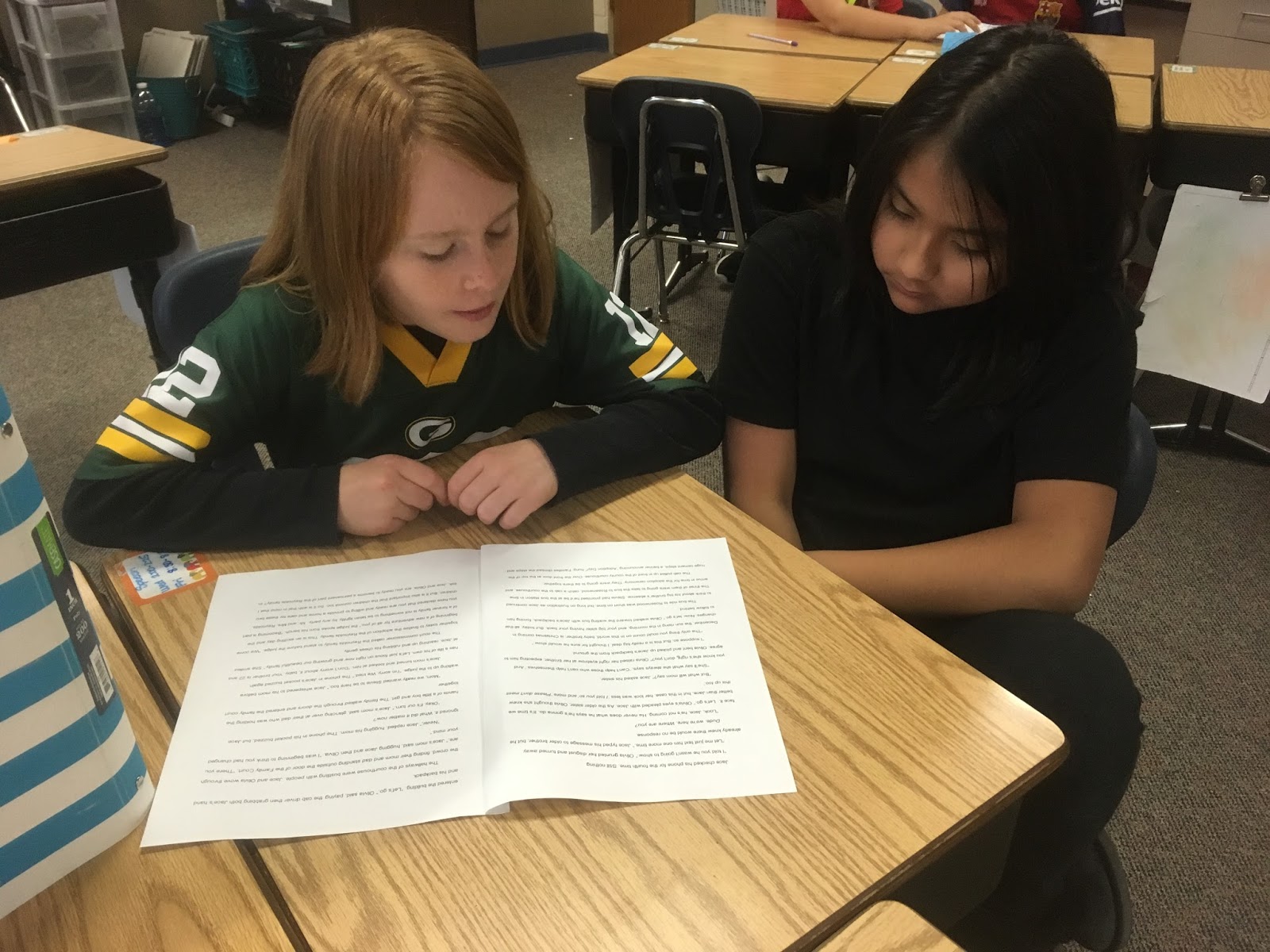
Last Thursday was the day the entire school took a break from what we were doing and for one hour, we read and commented on each other's cartoneras. Students met up with their character ed buddy and walked around together, stopping often to read a cartonera together.
Even the teachers got in on the fun.


After reading a cartonera, the reader left a compliment on the Raves From Readers page.

The students could hardly wait to get back to their classroom to read their Raves From Readers comments. They were incredibly empowering and demonstrated the effect of writing for an authentic audience.

Then in the evening, we invited families to school to read the cartoneras and to make a family cartonera to take home to write their family story.


We also had Paloma Celis Carbajal, a bibliographer and cartonera expert from the University of Wisconsin - Madison visit us. She brought with a few of the cartoneras from the UW collection, the largest collection of cartoneras in the United States, for our kids to check out.

Here's what some of my students had to say about the Cartonera Project:

"When the books were published, I felt accomplished."
"It was fun to walk around with my buddy to read books without my teacher." :)
"It kind of proves that you don't need to be a pro to write a book."
"I enjoyed getting to fix up a story and make it better."
"It was amazing and I thought it was cool. Everyone should do this!"

       Isn't that AWESOME??!!?

I am incredibly proud to have been a part of this celebration of writing and sad that the event is over. I am already thinking of ways to grow the program and make it even better, including expanding the project to other schools to connect students and classrooms from around the country in the spirit of writing.

If you are interested in learning more about possibly bringing a Cartonera Project to your school or classroom and would like to learn more, please fill out this Google form. When I get the information together, I will be in touch.

Tuesday, January 31, 2017

Slow Down for Practice

I've been thinking a lot lately about the pace at which I teach, especially when it comes to writing time.

The list of skills and strategies students must learn is a mile long.

Every day, I teach a mini lesson. We practice it. We talk about it.

The next day, we repeat.

I hope (wish, pray) that my students will learn the daily concept and apply it to their writing, magically transforming themselves into expert writers by the year's end.

But the truth is that in 5th grade, I still have students who cannot identify a fragment from a complete sentence, tell the difference between dialog and description, and can write five pages without a paragraph's indent in sight.

Why don't they get this? I frustratingly wonder to myself.

Maybe....it has something to do with pace.

Yes, mini lessons are important, but so is practice time. Students need time to practice and play with the new concept, to take ownership of it. If we are constantly rushing to the next lesson without allowing time for this to happen, it's no wonder that some kids can't write a coherent paragraph when they get to high school.

I'm going to try to be more aware of how much practice time I offer my students before moving on to the next skill.  My hope (wish, prayer) is that with more time, my students will internalize more writing moves that will help them grow into strong lifelong writers.

Tuesday, January 24, 2017

Should Students Know Their Reading Level?

Last week, I came across this post titled "A Level is a Teacher's Tool, NOT a Child's Label" from the Fountas and Pinnell blog.

F & P are gurus of reading assessment, so the post quickly caught my attention.

If you don't have time to read the post from F & P (although I hope you will), here are a few highlights that really hit me:

* Reading levels should guide, not limit, student choices when choosing a book for independent reading. (Donalyn Miller, The Book Whisperer, has said this too.)

* Reading levels aren't meant to be shared with students OR parents. They should not appear on a report card or in a teacher's evaluation.

* Reading levels are an estimate, not an exact measure of a student's reading ability.

* Reading is not about moving up levels, it is about enjoyment and building a lifelong habit. (Yep!)

* Reading levels are a teacher's tool to be used for assessment and instruction only.

This got me thinking about how I communicate with my student readers about their progress.

I do not use the F & P system for assessing my students, but we do take the Star Reader test every month to check for progress. (It is even a component in my teacher effectiveness plan.)

My students keep a chart in their goal notebook to track their growth. Some months, there are cheers as good growth is made.  Other months, they take a peek at their new score and quickly shut their notebooks.

This made me think about an assessment experience that I think many of us can relate too -- getting on the scale when I am trying to lose weight.  When the numbers on the scale go down showing good growth in my weight loss goals, I am happy and motivated to keep going. But when the numbers are stalled, or even worse, go up, I am deflated and want to go find a pack of Oreos and gallon of milk, ready to give up.

I need to think more about the post from F & P and how I can communicate reading growth to my students in a way that is positive, motivating and accurate.

I think the answer lies in conferring.

Do you have any suggestions?


Tuesday, January 10, 2017

Research Writing: Forget the "Expert" List

As I was writing my plans for our new research writing unit, I was concerned that my students would write about something they already knew a lot about, thereby foregoing the need to really dig deep into their research. By 5th grade, most kids have figured out on their own that if they choose a topic to research that they already know a lot about, their job will be easier.

But this unit was to be more than just about writing. I wanted them to learn something about their topic and really get into the research process too.

Knowing this, I thought of a way to help my students choose a fresh topic to research....and here's how:

We began by creating a list of everything we were an expert at or knew a ton about. I set the timer for three minutes as my kids wrote away. Creating this list was easy.

When the three minutes was up, we created another list -- a non-expert list. These would be the things we've always wondered about, wanted to learn more about, or held our curiosity. Another three minutes on the timer, but creating this list was a bit tougher for many.

After both lists were created, I asked the students to look at their expert list and circle the thing they knew the most about. We then did a whip around the room and as each student read his or her most expert topic, everyone either added it to their own expert or non-expert list. This helped the lists grow.

When we were finish sharing, I told my class to put a giant X through their expert list. They could not choose a topic for this project from their expert list.

      Shock!

            Horror!

                  Gasp!

After I explained that this writing project would not just be about writing, but should also teach us something, they understood the method to my madness. Everyone relaxed and got busy picking a new topic to research that would take them from having non-expert to expert status in no time!

Mission accomplished.


Sunday, January 1, 2017

Students Need a OLW Too!

Happy new year!

As we return to school this coming week, it is the perfect time to plan for and set goals for the new year.

Many of us do this in the form of a resolution, but I prefer to choose a word that will serve as my mantra and guiding light for the year. It's just easier to remember than a bunch of things that I will or will not do that come in the form of a resolution. (Even the word 'resolution' sounds harsh, doesn't it?)

By now, you may have chosen your One Little Word (OLW) for 2017. But have you considered having your students choose an OLW as a part of their goal-setting for the new year?

I have put together some resources for you to use to make this easy and fun.

This video can get things started:
This graphic organizer will help students choose a word. You can find it here.

Once students have chosen their word, they can reflect on how they will use it to meet their goals. This graphic organizer will get them thinking and help organize the writing process. You can find it here.

Looking for other ways to bring your students' OLW to life?

* Work with the art teacher to have students create a graphic representation or collage of their OLW.

* Give students a mailing label. Have their write their OLW on the label as a sort of name tag to wear.

* Students include their OLW after they write their name on their papers.

* Students write in their reflection journal at the end of every day of how they called on their OLW for guidance in decision making and action.

* Change name tags on desks (or add another one) to include students' OLW. This will help keep the word front and center during work times.

* Create a class book of OLW's. (Thanks Beth Foraker @inclusionchick for the suggestion!)


Best of luck to you as you begin 2017! I wish both you and your students much success in meeting your goals this new year!

Tuesday, December 6, 2016

Ideal Readers: My Students Give ME Writing Feedback!

After following Kimberley Moran's journey with the Institute of Children's Literature's Writing for Children and Teens writing course, I decided to give it a go myself.

My first assignment was to write a 500 - 750 word story based on one of three pictures. I wrote and wrote -- and rewrote and rewrote -- my story.. Finally, I had a finished product that satisfied me, but fell short of thrilling me. I wasn't sure exactly what about the story didn't sit right with me, but I knew there was something.

Lucky for me, I teach a room full of ideal readers (10 year olds) that could help me out by reading my story and giving me their feedback. Problem solved!

In our classroom, we provide writing feedback using the TAG method:
   
Tell something you like
Ask a question
Give a suggestion

When a student finishes a piece of writing, they find someone to "TAG" it. Reader feedback can be so valuable to a writer, and we have spent a lot of time learning how to give meaningful feedback that can help the writer make revisions. (In other words "I like it" and "This was good" are not helpful.) 

So on Friday, it was my turn to have my writing tagged by 20 readers.

It was the best move I could have made.

My students worked in partners to pour over my writing. They knew how important this course was to me and asking them to participate in making it a successful experience was a job they took very seriously.

After about 20 minutes, I called the group back together to give me their feedback.  They noticed some amazing things about my writing that had even slipped past me. The questions they asked and suggestions they made were both thoughtful and helpful. I now realize what it was that didn't quite sit right with me and have a plan to fix it in revision.


But sharing my writing and asking my students for help did more than just help me improve my writing.

It empowered my students.

A win-win for all of us.


Saturday, November 12, 2016

Messing Around

We are finishing up a round of Genius Hour projects, getting ready to share our learning with each other. I asked students to prepare their projects for a three to five minute presentation. One boy decided he wanted to create an iMovie for his project, but said he didn't know how.

"Okayyy....," I told him a bit nervously, "I'm not very familiar with iMovie, but let's give it a shot."

I handed him my iPad and told him we could create a practice video together. To gather footage, he went around the school looking for places where math concepts were being used and put together a short video. We worked together to learn how to import clips, add photos, and edit his video snippets. He was pleased with his test project and made plans to take video for his Genius Hour project.

When he returned to Genius Hour class yesterday, he had his video recorded and saved to his Google drive -- All 15 minutes of it in one continuous clip.

"Can you help me edit it?" he asked. "There's some stuff I need to take out."

Together, we figured out how to load his (very long) video into iMovie.

"Hmmm...I'm not sure how to edit something in the middle of a clip," I told him. "We could Google it." (Google is one of my favorite teachers.)

"I still have my video in my Google drive just in case. Should I just mess around and see what I can figure out?" he suggested.

"Yes! Great idea!" I told him, slightly relieved. "Sometimes we just have to mess around with things until we figure them out."

He went off to his desk, putting his headphones on so he could hear the audio without disturbing others. He was super focused on the task at hand, determined to figure it out. Soon, he was next to me, teaching me how to use the "clip" button to edit footage within a video.

He was quite proud of himself. (I was too!)


This got me thinking.

How often do we allow our students time to just "mess around" with their learning?

Probably not often enough. 

We are so driven to get them to their learning destination that we forget the joy in the journey. We don't have time to allow kids to wander off the lesson plan path to see what new discoveries they can find. This kind of learning is messy. It may require us, the teacher, to admit we don't know something.

But that's okay.

This student reminded me that sometimes messing around with something is the best way to learn about it. I could have taught him exactly what to do, (after I Googled it, of course), but chances are he wouldn't have learned as much from me as he taught himself.

My goal is to introduce more messy learning whenever I can. To be okay with telling a student I don't know something, but that we can find it out together. To allow my kids to explore and learn from mistakes, then teach others what they've found.

This can be the best kind of learning.

And a good reason to celebrate.


Tuesday, October 25, 2016

Why They Write

Last Thursday, the National Day on Writing, I asked my students to think about what writing meant to them and how they use it every day. To gather our thoughts together, we created a Padlet with each student answering the prompt of the day, "Why do you write?"

I'll admit, I was a bit nervous for their answers. I was worried that they would all say they write because they have to, because I tell them to, because if they don't, their grades will tank.

Imagine my joy and the thrill I felt when I looked over their Padlet:
Seeing their words and hearing their conversations about this topic made this teacher's heart happy.

It showed why it is so important to take time for writing every day. Why we must give our students the time to explore their thoughts, their wishes, and their wonderings (and the occasional letter to Santa).

This is my wish for all of us -- teacher and student alike.

Thursday, October 20, 2016

Why I Am A Teacher Who Writes

Because I am a teacher who writes....

I understand how difficult it is to sometimes bring words to the page.

I know how important it is to connect with an authentic audience.

I can show my students how to take their writing to the next level.

I can share my own writing struggles and celebrations with my students.

I can share the magical feeling that comes from finding just the right words to say what I wanted to say.

My students see me as someone who walks the walk.

I find writing tricks that I can pass on to my students.

I understand that the writing process is not a straight road, but rather route filled with zigzags, detours, closed roads, side trips, tourist sites and rest stops.

I can use my own writing as mentor texts.

I can have my students teach ME about ways to make my writing better. (Instant engagement!)

I have connected with some amazing educators who also write. This has made me not only a better teacher, but a better person.
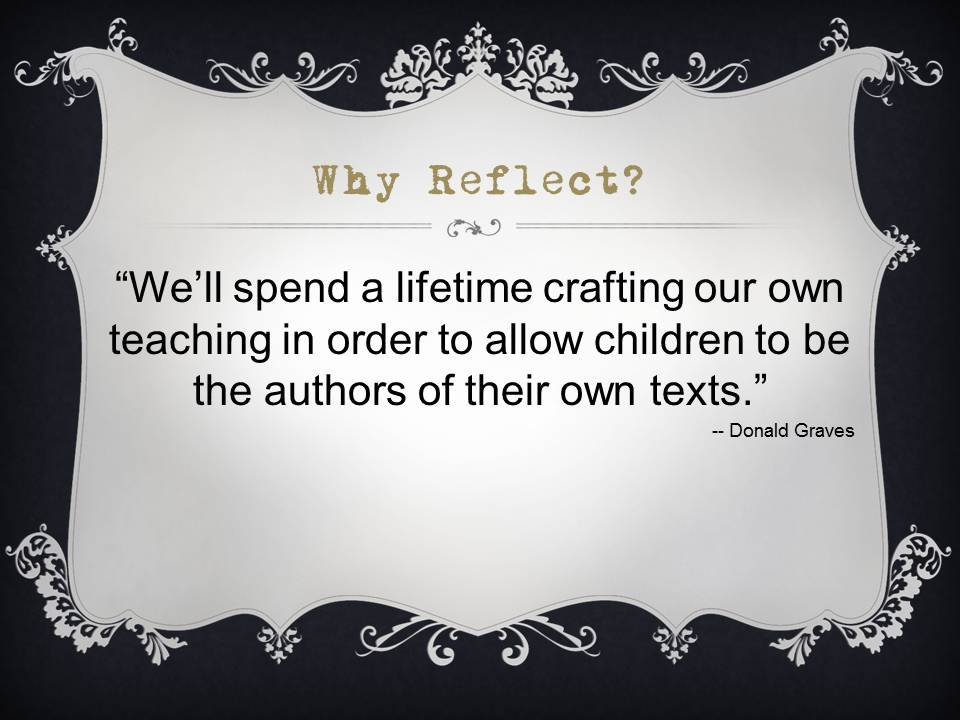
Today, October 20th, is the National Day on Writing. I hope you'll take a moment to celebrate by writing with your students today.


Monday, October 3, 2016

Homework: Why I Share the Answers

There is a lot of debate out there on the grading of homework. You can easily find reasons to support all sides of the  issue.

I'll begin by saying that I am not a fan of homework.

After researching and teaching my students about growth mindset, I am even less of a fan.

In my classroom, our focus is on the learning. Mistakes are welcome -- they are proof we are trying. Figuring out what we did to make those mistakes and taking steps to ensure it doesn't happen again is growth.

Growth mindset teaches us that our brains are always changing and growing. By trying new things, showing grit and perseverance, making mistakes and trying again, we are changing the physical structure of our brains for the better.

This does not work if I grade every assignment my students do.

They would be afraid to make mistakes.

They would hesitate to ask for help.

They would shy away from trying new things because they can't do it perfectly the first time.

So when I assign practice in math, my answer key is always open for students to check their answers. If we use a worksheet, I will often copy the answer key right on the back of the page. Sometimes, I just write the answers on the board. If my students got a problem wrong, they go back and fix it. If they can't figure out what they did, they ask for help.
This has built more confidence in all subject areas, but especially in math.

It has also helped me correct misconceptions before a student has done 30 problems incorrectly and has the incorrect procedures cemented in their brain.

So what do I grade?

The test.

Which, ironically, makes students try harder on their practice work, thereby increasing their learning.


Wednesday, September 28, 2016

Students Helping Students

While teaching a difficult concept in math, I can explain how to do it ten different ways and still be met with looks of confusion by some students.

I can go over the "why" behind the way to do it, and heads still shake.

But if a friend or classmate offers up help, the solution becomes clearer.

Kids just have a different way of explaining things in a way that makes sense to one another. Maybe it removes the intimidation factor of working with an adult, versus someone your own age.

I don't know, but I'm grateful when it happens.

Today, my students showed me just how willing they are to work together to make sure everyone learns.

It was a proud teacher moment.

Tuesday, September 27, 2016

30 Second Share: Learning About Your Students

Every Monday morning, right after I finish attendance and lunch count, we have a weekly tradition that has proven to be invaluable to me. I call it the "30 Second Share."

Basically, the way it works is we go around the classroom and each student shares one thing from their weekend. It takes about five minutes (shares rarely take 30 seconds), yet provides me so much information that I might not get another way.

Through the 30 Second Share, I've learned more about my students' lives outside school and about what's going on at home. Things like what they do (or don't do) on the weekends, their hobbies and interests, what they like to do for fun. I can then use this information in other areas of our learning day, such as when I recommend a book or when I make up a word problem in math.

But the 30 Second Share also gives me valuable insight into any trouble that might be brewing. Maybe someone is sick, a parent is away for awhile or a pet died over the weekend. I can make a note to check in with this student later in the day or week to see how things are going.

I also share something about my weekend during the 30 Second Share. The students love this! I feel sharing about my life helps build the connection I have with my students. They know me as a person, as well as their teacher.

Building connections with our students is one of the most important things we can do in the classroom. This short five minute activity every week is a small time investment to help make this happen. I think this graphic pretty much sums it up: